
1. The Grateful Dead’s Wall of Sound – The Most Expensive Failure in Concert History
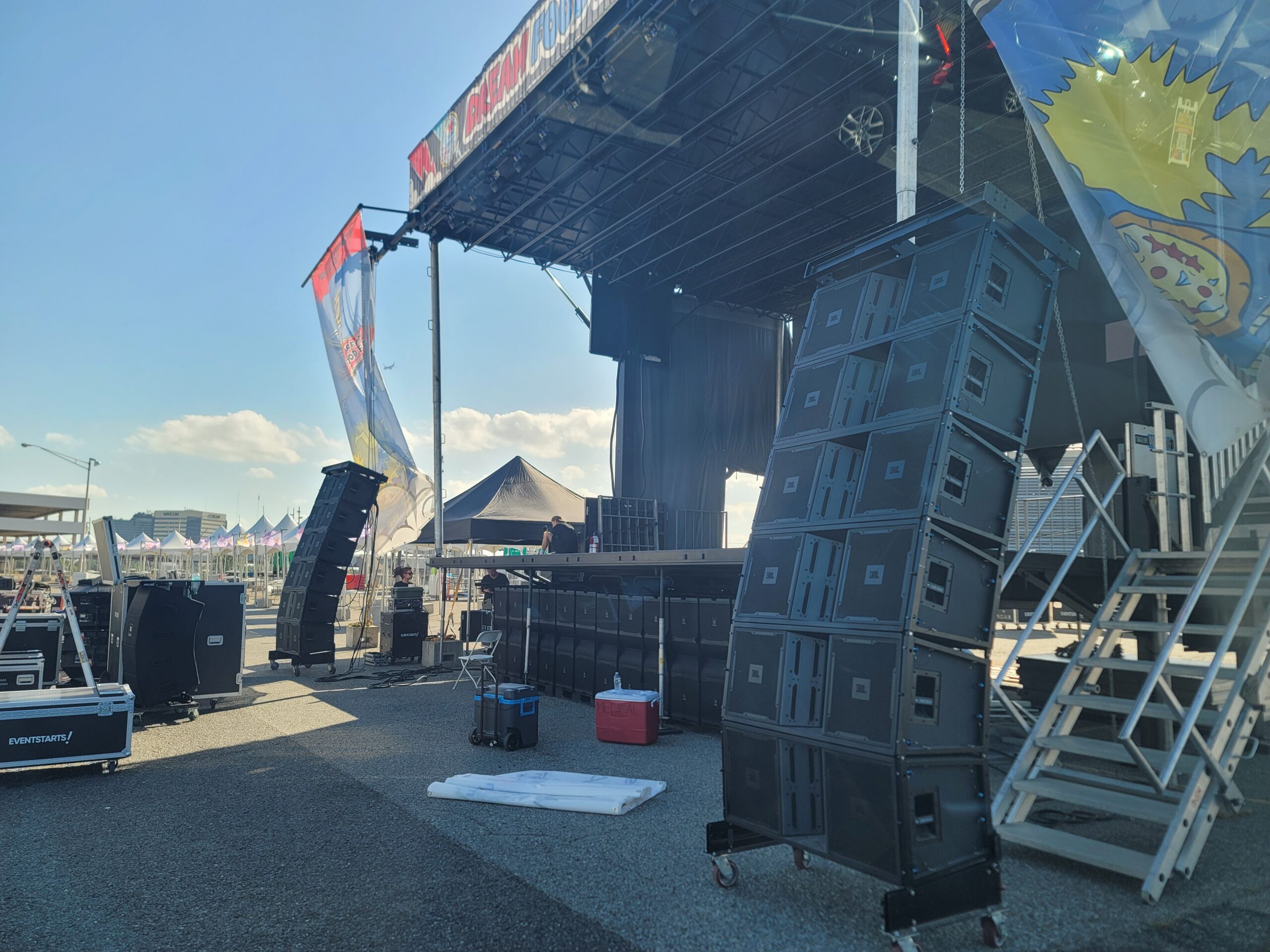
The Grateful Dead’s Wall of Sound was absolutely insane – 604 speakers, 26,400 watts of continuous power, and each instrument had its own column of speakers so there was no mixing needed. Phil Lesh’s bass alone used thirty-two 15-inch speakers in a massive tower. The thing was so massive it required four semi-trucks just to transport the speakers, another three trucks for the support structure, and a crew of 21 people working sixteen hours straight to set up. They only used it for one tour in 1974 because it was literally bankrupting them – each show lost money even when sold out. The band had to tour with two complete systems leapfrogging each other because setup took so long. When they finally retired it, band members admitted they missed it for the rest of their careers because nothing ever sounded as good.
2. The Bulgarian State Radio’s Accidental Mind Control Discovery
The Bulgarian State Radio speaker arrays from the 1960s were discovered to have accidentally created standing wave patterns that could induce specific emotional states in listeners. The communist government supposedly researched using them for crowd control and propaganda broadcasts, with documents showing they tested specific frequency combinations during political rallies. When Western engineers got their hands on the documentation after the Cold War, they found frequency combinations that could reliably trigger anxiety at 19 Hz, euphoria around 0.5 Hz pulses, or drowsiness using 10-minute sweeps between 60-90 Hz. Some of these principles ended up in modern cinema sound design – that feeling of dread in horror movies often uses the same 19 Hz “fear frequency” the Bulgarians discovered. There’s rumors that certain governments still use these techniques in crowd control speakers, though nobody will officially confirm it.
3. Bassnectar’s Chest-Crushing Bass That Created Weather
Bassnectar’s touring rig was so powerful it would literally suck all the air out of the front rows on bass drops – people described it like being punched in the chest by a ghost. His engineer Kyle Pace custom-built subs with 21-inch drivers that moved so much air they’d create visible vapor clouds from humidity condensing in the pressure waves. The system pulled 400,000 watts at peak and they had to install special barriers to stop people’s drinks from being knocked over by air displacement alone. At one outdoor festival, the bass was so intense it created a localized low-pressure system that actually caused a miniature dust devil to form in front of the stage. Security guards working the front barrier had to wear special protective ear gear usually reserved for airport ground crews because standard earplugs weren’t enough protection.
4. The Belgian Festival That Committed Ecological Genocide
In 2009, a festival in Belgium had to shut down their lakeside second stage because the underwater bass transmission was causing mass fish die-offs. The low frequencies traveled through the ground, into the water, and ruptured the swim bladders of carp and bass up to 200 meters away. Local environmental groups threatened lawsuits after hundreds of dead fish washed up on shore the morning after the first night. The festival had to bring in marine biologists who determined that frequencies between 30-40 Hz were matching the resonant frequency of certain fish organs. They now use isolation platforms that cost €50,000 just to decouple the subs from the earth, and some festivals near water now have to submit environmental impact studies specifically about subsonic transmission. The technology developed to solve this problem is now used in urban venues to prevent bass from traveling through building foundations.
5. Meyer Sound’s Secret Military Weapon Development Program
Meyer Sound’s MILO system was partly developed using military research into directed audio weapons, specifically the LRAD (Long Range Acoustic Device) program. The beam-steering technology can focus sound so tightly that you can stand between two people 10 feet apart and play completely different music to each of them with less than 3 dB of bleed. The military version was tested in Iraq for crowd dispersal using focused beams of unbearable frequencies that would make specific individuals flee while leaving everyone else unaffected. The commercial version of this technology is now used in museums and theme parks to create “audio spotlights” where you can only hear narration in specific spots. The same research led to systems that can throw intelligible speech over a mile – protesters at G20 summits reported hearing crystal-clear warnings that seemed to come from inside their own heads.
6. Japan’s Bone-Conducting Body Sonic Experience
In the 1990s, Japanese company Bodysonic created concert chairs with transducers built into them that would transmit bass directly through your skeleton, bypassing your ears entirely. They installed them at venues like Blue Note Tokyo, and people reported feeling like the music was coming from inside their own body – drums would pulse through your spine, bass lines would resonate in your ribcage. Some users claimed they could “hear” music for the first time despite being deaf, because the bone conduction bypassed their damaged ears entirely. The technology was so intense that they had to limit sessions to 45 minutes because longer exposure would cause temporary numbness in extremities. Pioneer tried to license the technology for cars but abandoned it after test drivers reported it was too distracting – the bass conducting through the seat would make people’s vision blur at stoplights.
7. Motorhead’s Venue-Destroying Volume Records
At Cleveland Variety Theater in 1984, Motorhead’s sound system hit 130 dB and literally cracked the venue’s ceiling, raining plaster down on the audience throughout the show. Lemmy famously said “If you’re not bleeding from the ears, we’re not playing loud enough” and meant it – their standard technical rider required venues to disable their limiters and remove all volume restrictions. The Cleveland venue tried to sue them, but Motorhead’s contract explicitly stated they could play at any volume they wanted and the venue would be responsible for any structural damage. Their record was eventually broken by Manowar who hit 139 dB in Hanover, but Motorhead still holds the record for most venue damage – they’ve collapsed three ceilings, blown out over 200 windows, and once caused a minor earthquake reading that registered on seismographs two miles away.
8. The Soundsystem Arms Race That Created “Phase Warfare”
Phase cancellation warfare is a real thing at festivals where competing stages use physics as a weapon. Sound engineers have been known to analyze the frequencies coming from neighboring stages and then slightly delay their own systems by a few milliseconds to create destructive interference, essentially using their PA to fire “anti-sound” at the competition. This creates dead zones in their competitor’s audience areas where the bass completely disappears. At one European festival, two rival sound companies got into such an intense phase war that they created a standing wave node where festivalgoers could stand in complete silence while speakers on both sides were pushing 110 dB. The practice is considered extremely bad form and can get you blacklisted from the industry, but it still happens. Some engineers now use spectrum analyzers specifically to detect if someone’s trying to phase-cancel them and will shift their delay times randomly to prevent it.
9. Funktion-One’s Anti-Digital Fundamentalist Approach
Funktion-One’s Tony Andrews refuses to use any computer modeling for his speaker designs, insisting on doing everything by ear in a process he calls “organic audio evolution.” His systems are legendary in the underground dance music scene, with some clubs reporting that people travel internationally just to hear their favorite DJs on a proper Funktion rig. The bass response is so clean that it feels more like a physical presence than a sound – clubbers describe being able to feel individual bass notes massaging different organs. Andrews claims digital modeling can’t account for how sound “tastes” in different environments and spends months hand-tuning each installation. Berghain in Berlin famously runs their Funktion system so loud but so clean that people dance for 36 hours straight without ear fatigue, something Andrews says is impossible with digitally-designed speakers because of phase smearing in the crossovers.
10. The Discovery of the “Brown Note” and Infrasonic Weapons
The “Brown Note” myth – that certain infrasonic frequencies around 5-9 Hz can cause involuntary bowel movements – has actually been tested by Meyer Sound and Mythbusters using massive subwoofer arrays pushing 150 dB. While it doesn’t actually make people soil themselves, the tests did discover that 19 Hz causes extreme anxiety, 17 Hz triggers panic attacks in about 20% of people, and 7 Hz can cause nausea and disorientation. These frequencies are below human hearing but your body still feels them. The research led to the development of “sonic barriers” used by military and police – walls of infrasonic energy that make people physically uncomfortable without causing permanent damage. Some concert systems now deliberately filter out anything below 20 Hz not for speaker protection but because liability insurance companies found out about the research and started adding “infrasonic assault” clauses to their policies.
