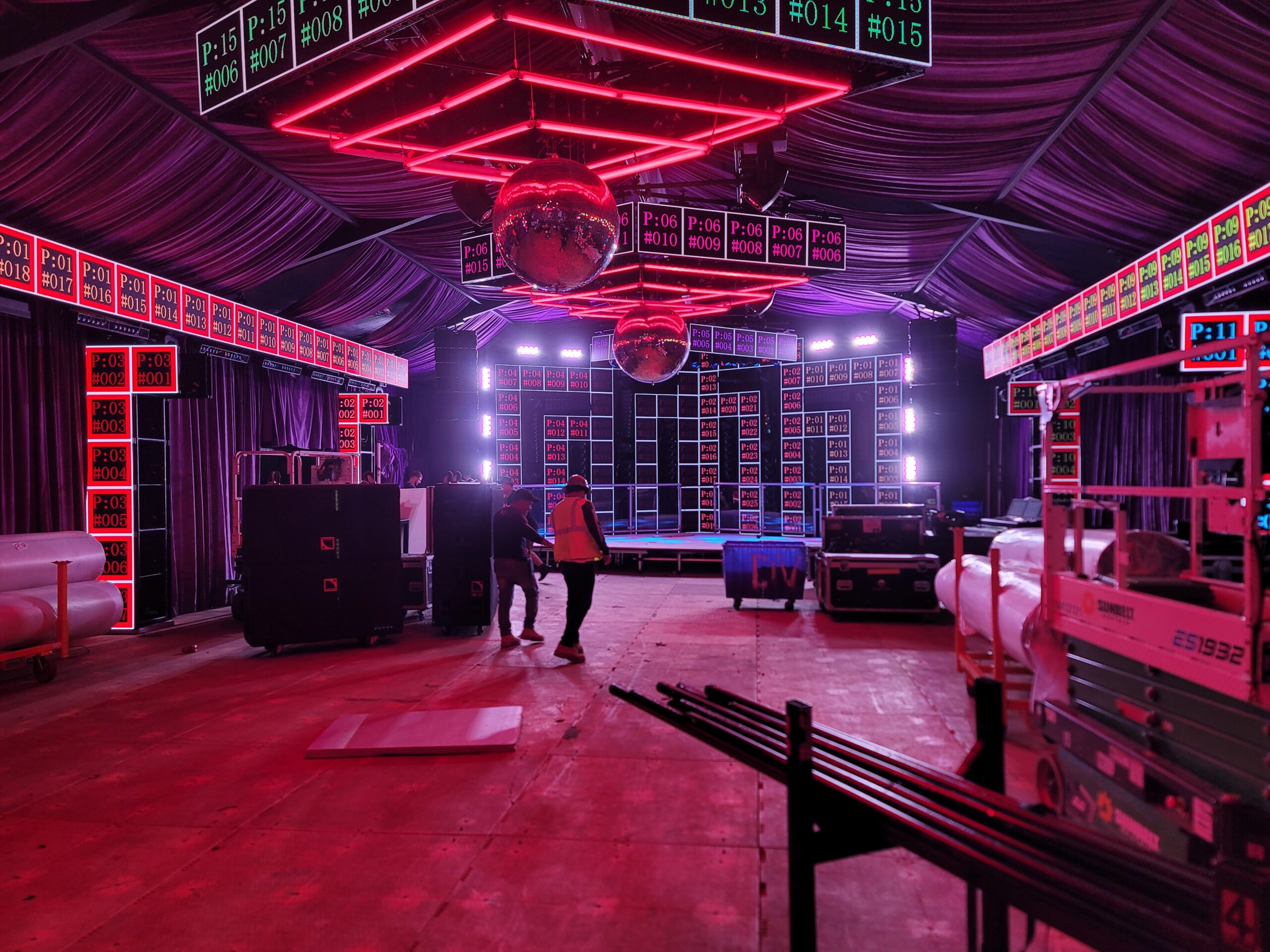

Video processing systems serve as the central nervous system of modern concert visual productions, managing multiple input sources, executing real-time effects, and distributing signals across massive LED displays. Understanding processing architecture, signal flow management, and system optimization enables creation of complex visual experiences while maintaining rock-solid reliability.
Core Processing Architecture
Modern concert video processors handle multiple 4K signals simultaneously while maintaining frame-perfect synchronization. Primary processors like the Brompton Tessera SX40 or Novastar MCTRL4K manage up to 8.8 million pixels at 60fps, sufficient for 200-square-meter displays at typical pixel pitches. These units perform color space conversion, scaling, and bit-depth processing in real-time with latency under 1 millisecond.
Input capacity determines system flexibility, with professional processors accepting 8-16 simultaneous sources. Each input supports various formats including 3G-SDI, HDMI 2.0, DisplayPort 1.4, and 12G-SDI for 4K signals. Format conversion happens automatically, eliminating compatibility concerns between sources. Hot-swappable input cards enable configuration changes without system shutdown.
Output architecture employs parallel processing distributing computational load across multiple channels. Each output typically drives 650,000 pixels, requiring 12-16 outputs for large displays. Ethernet-based distribution using protocols like NDI or SMPTE 2110 enables flexible routing over standard network infrastructure. Fiber optic outputs extend transmission distances to 10 kilometers without signal degradation.
Frame buffer memory stores multiple frames enabling advanced processing effects. 32GB of DDR4 RAM accommodates 8 frames of 4K content at 10-bit color depth. This buffering enables frame rate conversion, motion interpolation, and freeze effects. Error correction codes detect and fix memory corruption preventing visual artifacts.
Signal Management Systems
Matrix switchers route any input to any output with microsecond switching times. 32×32 matrices handle most concert requirements, with larger productions cascading multiple units. Seamless switching prevents black frames during transitions. Preview outputs enable operators to verify sources before switching to program.
Multiviewers display multiple sources on single monitors, essential for operator situational awareness. 16 sources per monitor represent typical configurations, with customizable layouts optimizing for specific workflows. Tally indicators show which sources are live, preventing accidental switches. Under-monitor displays show audio meters, timecode, and system status.
Scan converters transform between video standards and frame rates. Converting 60fps computer graphics to 50fps broadcast standards requires sophisticated motion interpolation. Standards conversion between 1080i and 1080p maintains temporal resolution. These conversions introduce 1-2 frames latency requiring compensation in synchronized systems.
Distribution amplifiers split signals to multiple destinations without degradation. 1-to-8 distribution represents standard configurations, with larger systems cascading multiple stages. Reclocking on each output maintains signal integrity over long cable runs. Redundant power supplies prevent single points of failure.
Scaling and Format Management
Input scaling adjusts various source resolutions to match display specifications. A 1920×1080 camera feed scaling to 7680×2160 for a large LED wall requires high-quality interpolation maintaining image clarity. Bicubic and Lanczos algorithms provide superior results compared to simple linear scaling. Hardware scalers perform this processing in real-time without frame drops.
Aspect ratio management preserves correct proportions when mixing content formats. 16:9 broadcast content displaying on 32:9 ultra-wide displays requires pillarboxing or creative filling. Automatic detection adjusts settings based on input metadata. Manual overrides accommodate non-standard formats or creative requirements.
Edge blending overlaps multiple processors or projectors creating seamless large images. Overlap regions typically span 10-20% of adjacent areas. Gradient generators create smooth transitions eliminating visible boundaries. Geometric correction compensates for curved or irregular surfaces maintaining image geometry.
Color space conversion ensures accurate reproduction across different source standards. Rec. 709 broadcast content converting to DCI-P3 for modern LED panels requires 3D lookup tables. These conversions must preserve artistic intent while maximizing display capabilities. Real-time processing handles 4K 60fps signals without quality loss.
Latency Management
Processing latency impacts synchronization between audio and video elements. Each processing stage adds 0.5-3 milliseconds delay. Complex signal chains accumulate 10-20 milliseconds total latency. Audio delay systems compensate maintaining lip-sync accuracy. Latency monitoring displays real-time measurements enabling precise adjustment.
Frame synchronization aligns all sources to common timing references. Genlock signals distributed throughout systems ensure frame-accurate alignment. Tri-level sync supports HD and 4K formats. GPS-based synchronization enables frame accuracy across multiple venues for distributed productions.
Low-latency modes bypass certain processing features reducing delay for IMAG applications. These modes achieve sub-frame latency essential for maintaining performer-audience connection. Processing power trades off against latency, with operators balancing quality versus responsiveness.
Variable refresh rate support accommodates gaming computers and specialized content sources. Adaptive sync technologies prevent tearing when frame rates fluctuate. This capability enables integration of real-time rendered content responding to live inputs.
Redundancy Implementation
Primary and backup processor configurations ensure show continuity despite hardware failures. Hot standby systems mirror all settings and inputs, ready for instant activation. Automatic failover switches detect frozen frames or signal loss, switching within 100 milliseconds. Manual override controls enable operator intervention.
Input redundancy provides multiple paths for critical sources. Cameras feed both primary and backup processors through independent paths. Network-based sources multicast to multiple destinations simultaneously. Source priority lists define automatic selection when primary inputs fail.
Output redundancy employs multiple processors driving separate display sections. Processor failure affects only assigned sections rather than entire displays. Cross-coupling enables any processor to drive any section through matrix routing. This architecture prevents single points of failure.
Power redundancy includes UPS systems and redundant power supplies within processors. Automatic transfer switches select between utility and generator power. Battery runtime calculations ensure sufficient capacity for generator startup or controlled shutdown. Power monitoring alerts operators to anomalies before failures occur.
Control System Integration
Show control systems synchronize video processing with lighting, audio, and automation. Protocols like Art-Net, sACN, and OSC enable real-time parameter control. Timecode synchronization ensures frame-accurate cue execution. MIDI triggers from playback systems automate source switching and effect changes.
API integration enables custom control applications tailored to specific productions. RESTful APIs provide programming access to all processor functions. WebSocket connections enable real-time status monitoring. Custom interfaces optimize for specific operator preferences and show requirements.
Preset management stores complete processor configurations for instant recall. Each song or act maintains dedicated presets including routing, scaling, and effects. Morphing between presets creates smooth transitions. Version control tracks changes enabling rollback if issues arise.
Remote control capabilities enable processor adjustment from front-of-house positions. Dedicated control surfaces provide tactile feedback preferred by operators. Tablet interfaces offer mobility for setup and troubleshooting. Web interfaces enable remote support from manufacturers.
Performance Optimization
Load balancing distributes processing across available resources preventing bottlenecks. Dynamic allocation adjusts based on active effects and source complexity. CPU and GPU utilization monitoring identifies capacity constraints. Thermal management maintains optimal operating temperatures through intelligent fan control.
Cache optimization reduces memory bandwidth requirements improving performance. Frequently accessed frames remain in fast cache memory. Predictive algorithms pre-load anticipated content. Memory defragmentation maintains efficient allocation preventing slowdowns.
Pipeline optimization minimizes processing stages reducing latency and resource usage. Unnecessary color space conversions get bypassed when formats match. Direct paths between compatible interfaces eliminate redundant processing. Hardware acceleration offloads intensive operations from general processors.
Quality versus performance settings balance visual fidelity against system resources. Motion blur, anti-aliasing, and color depth adjust based on available processing power. Operators prioritize quality for slow content while accepting reduced quality for fast motion. Automatic quality adjustment maintains consistent performance.
Video processing systems represent critical infrastructure investment for professional concert productions. Understanding capabilities and limitations enables optimal system design balancing performance, reliability, and cost. As display resolutions and audience expectations continue rising, processing systems must evolve correspondingly, maintaining seamless integration while pushing creative boundaries.
