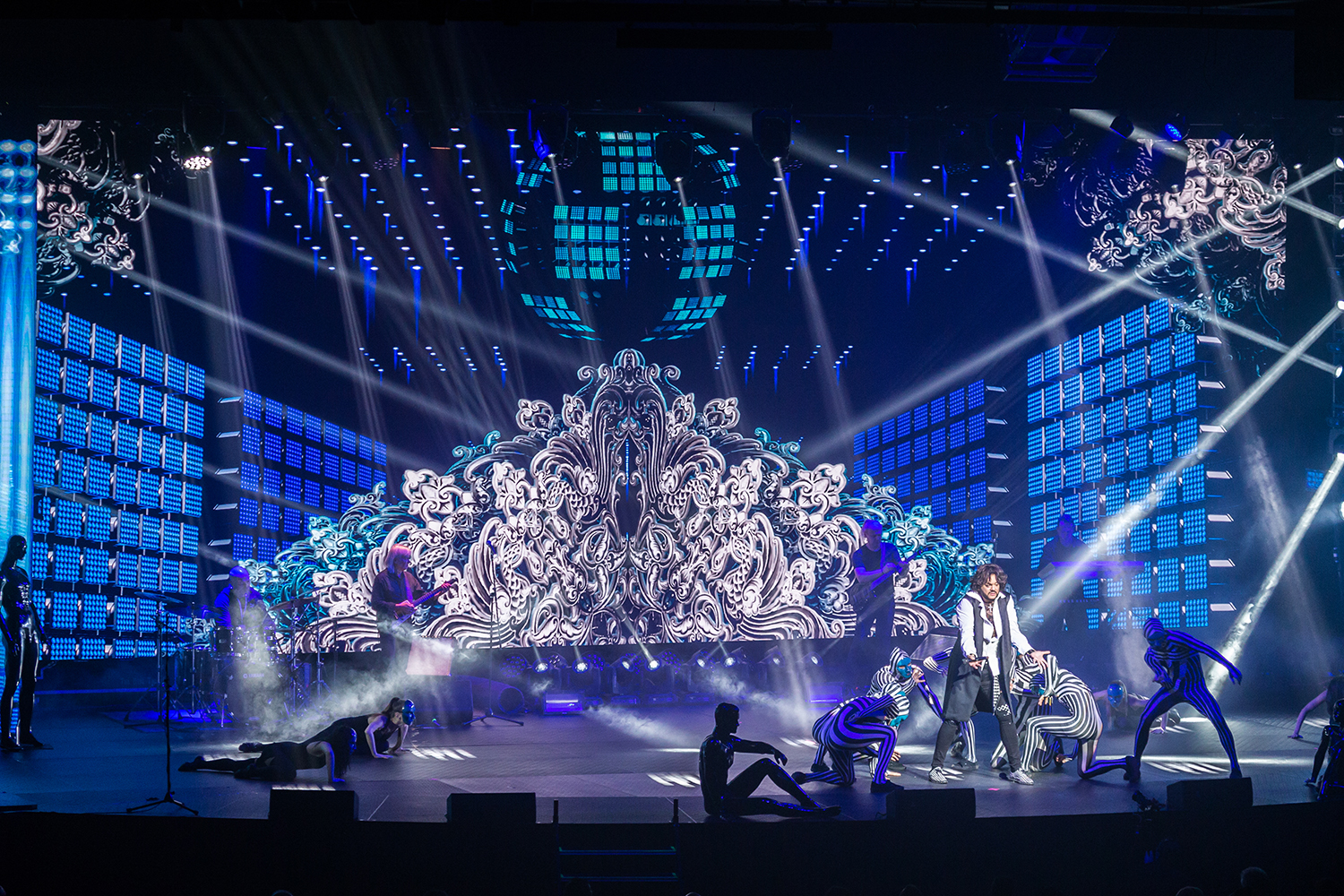
LED walls have evolved from simple video display elements to fundamental components of stage design. The most compelling productions integrate LED surfaces with scenic elements, lighting design, and performer positioning to create unified visual environments. This integration requires collaboration between video, scenic, and lighting departments from early design phases.
Beyond the Background Screen
Traditional stage video places screens behind performers as backdrop elements separate from the physical stage. Advanced integration treats LED surfaces as part of the scenic environment itself. Walls extend around performers, creating immersive visual spaces. Floor panels place performers within rather than in front of visual content. The distinction between set and screen dissolves.
This integration demands content designed specifically for three-dimensional LED environments. Flat video designed for traditional screens fails to exploit immersive possibilities. Perspective-corrected content that responds to viewer position creates convincing environmental illusions. Content production becomes as important as hardware specification in achieving integrated results.
Mixing LED with Physical Scenery
The most sophisticated designs combine LED surfaces with physical scenic elements that extend visual themes beyond the screen boundaries. A cityscape on LED walls might transition into physical building facades at the edges. Forest environments on screens might connect to dimensional tree elements in the foreground. These combinations ground virtual imagery in physical reality.
Color and lighting on physical elements must match LED content for seamless transitions. Stage lighting washes physical scenery with colors sampled from video content, creating visual continuity across the hybrid environment. This coordination requires real-time communication between lighting consoles and video servers or careful programming that synchronizes departments.
Depth and Layering Strategies
Multiple LED surfaces at different depths create layered visual environments with genuine physical dimension. Transparent LED in foreground positions allows audiences to see through to solid LED backgrounds. The actual physical separation creates parallax as viewers move, adding dimensional perception no single-plane installation achieves.
Content designers exploit these layers with foreground elements on transparent surfaces and background environments on rear walls. Performers move between layers, interacting with different content zones. The layered approach multiplies creative possibilities while requiring more complex content production and system configuration.
Floor Integration Techniques
LED floor panels extend visual environments beneath performers, enabling content that responds to movement or creates ground-plane effects impossible with vertical-only installations. Dance productions use floor LED for tracking visual effects. Product launches place items on LED pedestals surrounded by supporting graphics. The floor becomes active rather than neutral ground.
Floor LED requires specific panel designs that withstand foot traffic while maintaining visual quality from viewing angles above. Matte surfaces reduce glare that glossy panels create under stage lighting. Structural framing supports performer weight while maintaining panel alignment. These specialized requirements increase costs and limit supplier options compared to standard wall panels.
Lighting Design Coordination
LED walls generate substantial light that affects overall stage illumination. Bright video content on walls becomes effectively the key light source for nearby performers, potentially overwhelming designed lighting looks. Lighting designers must account for LED contribution when programming looks that maintain intended visual balance.
Content brightness levels should be specified in lighting design discussions. Running LED walls at full brightness rarely serves productions well; lower levels integrate more naturally with stage lighting while reducing eyestrain for audiences viewing bright surfaces for extended periods. Content designers and lighting designers negotiate brightness ranges that serve both departments.
Curved and Angled Configurations
Straight flat walls represent just one configuration possibility. Curved LED surfaces wrap environments around performers and audiences. Angled panels create geometric designs that reflect and interact with stage lighting. Unconventional arrangements transform LED from display medium to architectural element.
Content for non-flat surfaces requires perspective correction to appear natural. Software tools map content onto curved surfaces, compensating for the distortion that flat content would display on curved panels. Complex geometries demand sophisticated content preparation or real-time processing that maintains visual coherence across irregular shapes.
Performer Positioning Considerations
Performers appearing in front of LED walls compete visually with background content. Lighting must separate performers from busy backgrounds or risk losing them visually. Content design should include lower-brightness zones where performers typically position. Alternatively, performers can be lit dramatically brighter than background content to ensure visual separation.
Camera considerations add complexity when events are captured for broadcast or streaming. Video contrast between performer and background affects how well cameras render the complete image. What works visually in person may not translate to captured footage. Technical rehearsals should include camera tests of performer positions against actual content.
Content Design for Integration
Content created for integrated environments differs from traditional video production. Resolution requirements depend on LED wall pixel pitch and viewing distances. Aspect ratios match specific wall configurations rather than standard formats. Content zones accommodate performer positions and physical scenic elements.
Generative content that responds to show elements in real-time enables integration levels pre-rendered content cannot achieve. Audio-reactive visuals pulse with music. Motion sensors trigger effects when performers reach specific positions. These interactive elements create the illusion that environments respond to performance action rather than simply playing predetermined sequences.
Structural and Rigging Requirements
Integrated LED installations often require custom structural designs beyond standard rigging approaches. Curved configurations need framework supporting panels in precise positions. Floor installations require substructures handling performance loads. Overhead elements demand rigging engineering ensuring safe support for substantial weights.
Structural decisions influence creative possibilities from early design phases. Understanding what structures can be built within budget and venue constraints shapes design development. Include structural engineers in conceptual discussions to identify feasibility issues before designs advance too far to change economically.
Planning the Integration Process
Successful integration requires collaboration between video, scenic, lighting, and structural teams from initial concept development. Decisions in each discipline affect others; isolated department planning creates conflicts discovered only during production when changes are expensive. Regular cross-department coordination throughout design and production phases prevents costly surprises.
Build adequate technical rehearsal time into production schedules. Integrated environments require tuning that cannot happen until all elements are in place. Content adjustments, lighting modifications, and performer blocking refinements all require time with complete systems operational. Rush integration rehearsals compromise the results that careful planning intended to achieve.
LED integration transforms stages from performance platforms with background screens into immersive environments where video, scenery, and lighting combine into unified visual experiences. Achieving this integration demands interdisciplinary collaboration and content specifically designed for unique configurations. The creative possibilities justify the additional complexity.
