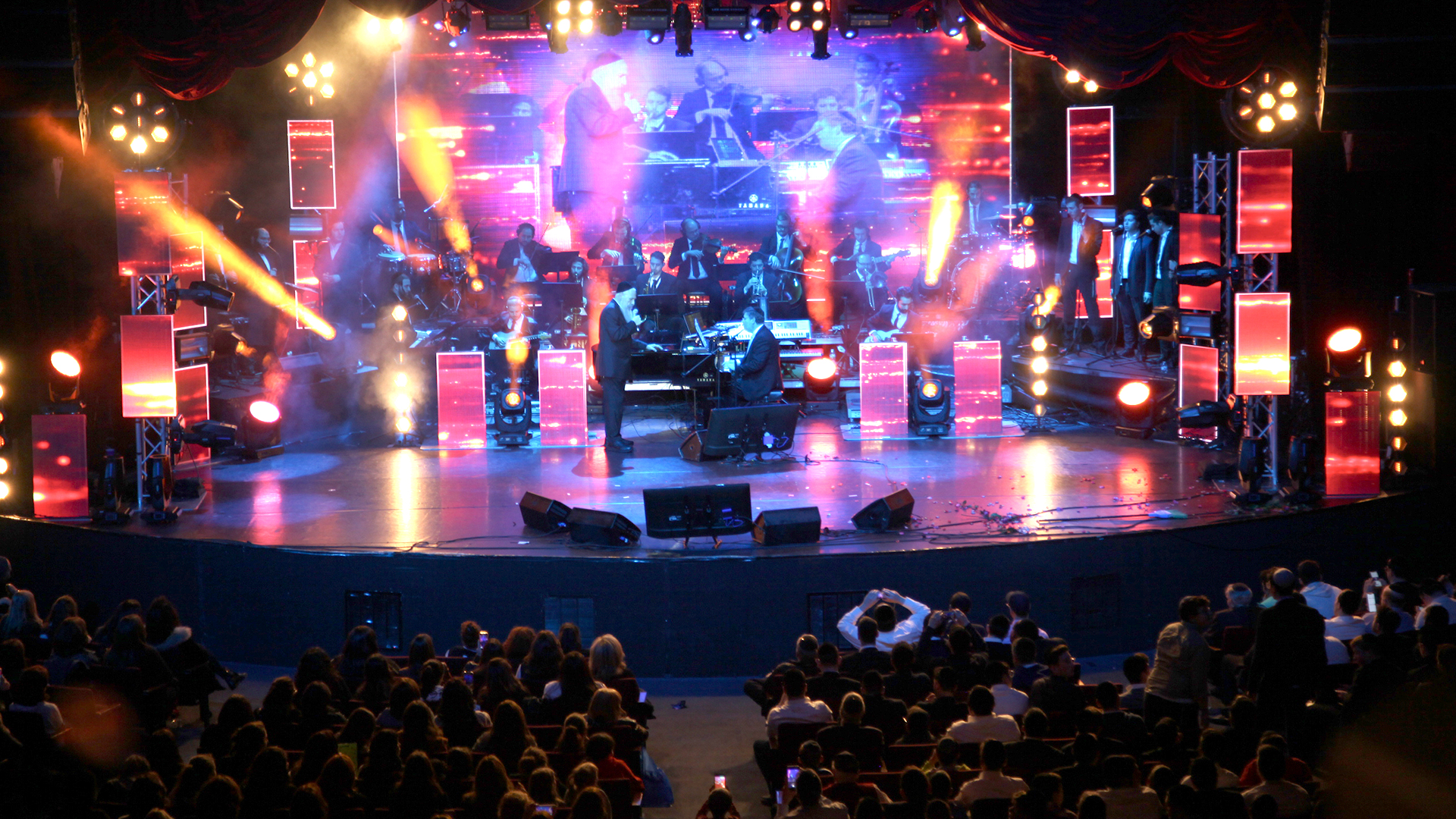
The moments between scheduled programming represent both a challenge and an opportunity for event producers. Attendees lingering in ballrooms during session breaks need visual engagement that maintains energy without demanding active attention. Video loops functioning as motion decor solve this problem elegantly when executed with intention and technical precision.
Understanding the Psychology of Ambient Video
Ambient video occupies a unique category in visual content—present enough to register subconsciously but unobtrusive enough to allow conversation. Research from the Environmental Psychology journal demonstrates that slowly moving imagery reduces perceived wait times by up to 35% compared to static displays, explaining why airports and healthcare facilities have adopted this approach extensively.
The content must avoid what designers call ‘attention capture’—elements like sudden movements, faces looking at camera, or high-contrast text that involuntarily draw focus. Instead, effective motion decor employs gradual transitions, natural movement patterns, and harmonious color palettes that register peripherally.
Technical Specifications for Seamless Loops
Creating truly seamless loops requires understanding both the creative and technical dimensions. A perfect loop point must account for:
- Motion continuity—any moving elements must be in identical positions at loop start and end
- Color consistency—gradients or color shifts need matching values at both ends
- Audio continuity—if soundtrack accompanies the visual, musical phrases must resolve naturally
- Compression artifacts—codec artifacts accumulate over loop repetitions, requiring attention to encoding settings
Software platforms like After Effects include expression tools for creating mathematically perfect loops. The loopOut() expression applied to keyframed properties creates seamless repetition automatically. For more complex motion graphics, Cinema 4D and Blender offer procedural animation options that loop by design.
Content Categories That Work
Abstract and Geometric Motion
Particle systems create organic, flowing visuals that never feel repetitive. Tools like Trapcode Particular in After Effects or X-Particles in Cinema 4D generate endless variations of drifting elements. When tuned to brand colors and constrained to subtle movement speeds, particles work beautifully across diverse corporate contexts.
Geometric patterns with slow rotations or transformations evoke precision and sophistication. The Plexus plugin creates connected node networks reminiscent of technological themes popular in finance and tech industries.
Nature-Inspired Content
Slowly moving water, clouds, or abstract representations of natural phenomena provide universally calming visual interest. Stock footage libraries like Shutterstock, Getty Images, and Pond5 offer extensive collections specifically tagged for looping applications.
The Kinemaster Pro style of smooth, contemplative nature footage originated in the 1990s broadcast world and has found new life in corporate environments seeking biophilic design elements—the integration of natural patterns into built environments.
Playback Systems and Integration
Dedicated media servers like Watchout, disguise (d3), and Resolume Arena handle loop playback professionally, managing crossfades and offering real-time adjustments. For simpler installations, the BrightSign series of solid-state media players provides reliable, affordable looping without computer complexity.
Integration with event timing requires show control systems capable of triggering content changes based on schedule. Platforms like QLab (Mac) or Medialon Manager can automate transitions from ambient loops to session content based on predetermined timecode or operator cues.
Resolution and Aspect Ratio Considerations
Modern LED walls and projection systems increasingly operate at 4K resolution (3840×2160) or higher. Content created at lower resolutions exhibits visible scaling artifacts when stretched to fill these canvases. Producing loops natively at target resolution ensures crisp, professional presentation.
Non-standard aspect ratios present additional challenges. A portrait-orientation LED column requires 9:16 content rather than standard 16:9. Ultra-wide configurations spanning 32:9 or wider need content specifically designed for these extreme formats. Stretching standard content looks amateurish and undermines the environmental ambiance the loops should create.
Historical Development of Motion Decor
The concept of projected ambient imagery traces to the 1960s multimedia experiments of artists like Nam June Paik and the Experiments in Art and Technology (E.A.T.) collective. Their pioneering work explored how moving images could transform environments rather than simply deliver messages.
Commercial adoption accelerated in the 1980s when MTV’s visual style influenced corporate presentations. The introduction of affordable video projection in the 1990s and subsequent LED technology advances made ambient video practical for mainstream events. Today, the technique has evolved from novelty to expectation at higher-end gatherings.
Sound Design for Ambient Loops
While many motion decor applications run silent during breaks, adding subtle audio can enhance the immersive quality. The ambient music genre pioneered by Brian Eno provides conceptual guidance—soundscapes designed ‘to be as ignorable as it is interesting.’
Platforms like Epidemic Sound and Artlist offer licensed ambient tracks specifically designed for looping. The Meyer Sound Constellation system and similar acoustic enhancement technologies can create enveloping soundscapes that complement visual content without interfering with conversation.
Practical Implementation Tips
- Create multiple loop variants of different durations (30 seconds, 1 minute, 3 minutes) for flexibility
- Test loops at actual event brightness—content appearing perfect in edit suites may look washed out in bright event spaces
- Include brand color variations that can be swapped for different sponsors or event days
- Archive source files—clients frequently request modifications for subsequent events
- Build transition presets for moving smoothly from loops to scheduled content
Motion decor represents a subtle but significant element of sophisticated event production. When executed thoughtfully, video loops transform dead time into atmospheric continuity, maintaining the elevated experience attendees expect from premium gatherings. The investment in quality ambient content pays dividends across every moment of an event, not just during scheduled programming.
