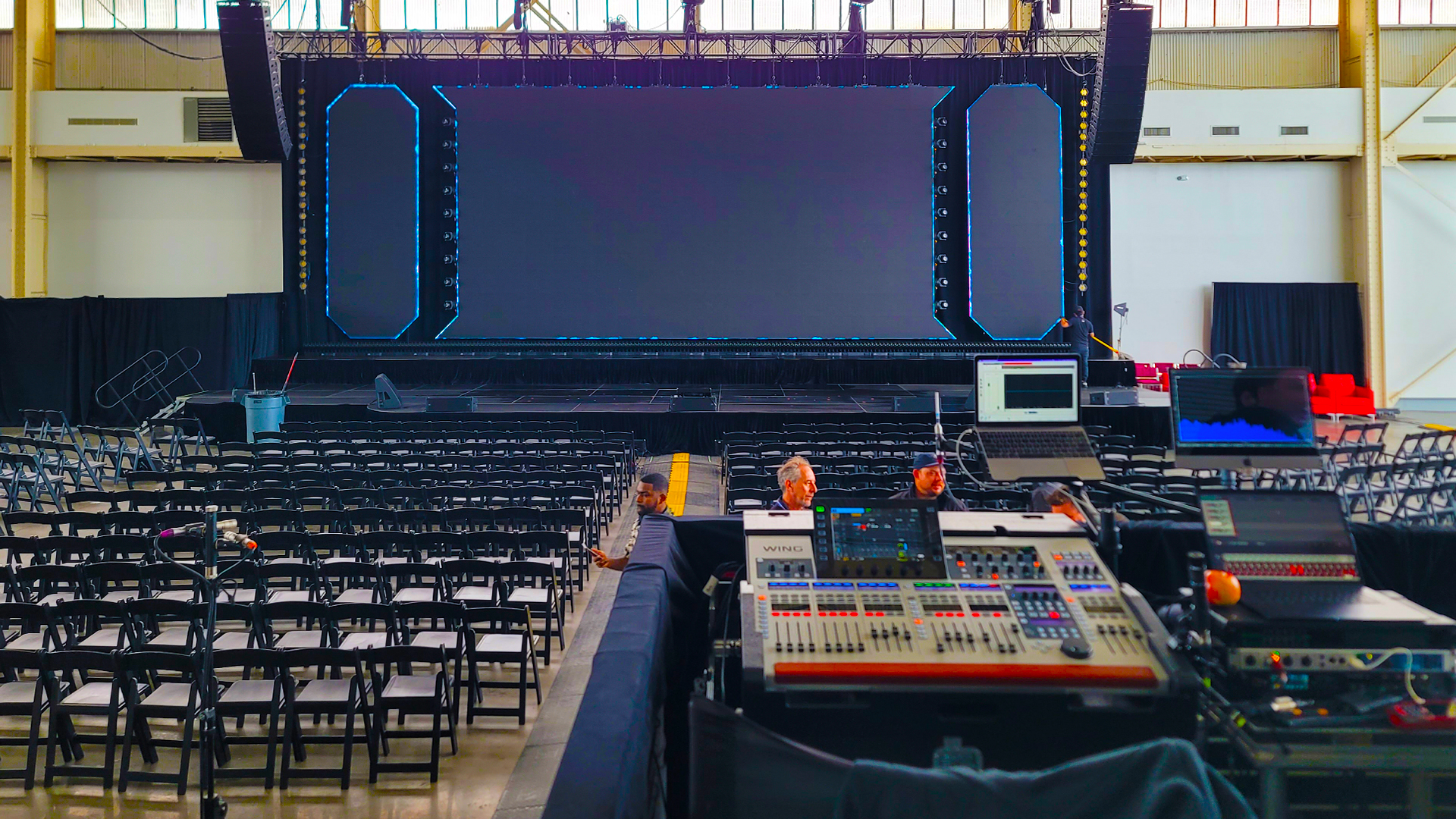
There’s a special kind of terror that grips a lighting designer when their console decides to develop a mind of its own. The house lights blazing on during the emotional climax. Fixtures snapping to full white during a blackout cue. The grandMA3 suddenly deciding that every fixture should point straight at the artist’s face. These aren’t hypotheticals—they’re war stories from the trenches of live entertainment production.
The Ghost in the Machine: Understanding Console Failures
The evolution of lighting control systems from early resistance dimmers to modern networked ecosystems has created both tremendous capability and tremendous complexity. When MA Lighting introduced the original grandMA in 2004, it revolutionized what a single operator could accomplish. But with that power came new failure modes that the analog era never imagined.
A console going “rogue” typically results from one of several causes: network conflicts, corrupted show files, hardware degradation, or the dreaded combination of all three occurring simultaneously during the most critical moment possible. Industry veterans share a gallows humor about these incidents, but behind every joke lies genuine trauma.
The Broadway Blackout of 2018
Consider what happened during a major Broadway revival in 2018. The production was running an ETC Eos Ti as primary control with a backup Eos Apex tracking every change. Standard redundancy protocol, exactly as the rental house specified. The show had been running for six months without incident when, during a sold-out Saturday evening performance, the primary console experienced what technicians later described as a “cascading DMX anomaly.”
Translation: fixtures started doing whatever they wanted. The automated Vari-Lite VL3500 spots that had been faithfully following their cues for months suddenly decided to execute movement patterns that existed nowhere in the programming. The Color Kinetics LED strips cycled through their entire color-mixing range in approximately three seconds. House lights flickered like a haunted mansion attraction.
Tracing the Digital Gremlins
Post-incident analysis revealed the culprit: a combination of factors that no single check would have caught. The sACN network feeding DMX data to the various universes had developed packet collision issues due to an improperly configured switch. A firmware update on the Luminex network nodes had subtly changed timing parameters. And a corrupted cue—created weeks earlier when an operator saved during a power fluctuation—finally executed when the system reached that specific point in the show.
The cascade effect amplified these minor issues into major chaos. Modern lighting networks operate with microsecond precision; introduce even small timing errors, and the results can be spectacular in all the wrong ways.
Prevention Through Paranoid Preparation
Experienced lighting programmers develop rituals that border on superstition but actually represent sound engineering practice. The show file backup routine is sacred: save to console, save to USB, save to network drive, save to cloud. Before every performance, run through critical cues manually to verify fixture response. Check that the DMX merge behavior hasn’t changed overnight.
The grandMA3 ecosystem now includes sophisticated network monitoring tools, but these only help if someone actually watches them. Smart productions designate a network technician whose sole responsibility during shows is monitoring data flow across the Art-Net and sACN streams, watching for anomalies before they manifest as visible problems.
The Arena Tour Nightmare
Arena tours present unique console reliability challenges. The lighting rig travels city to city, getting reassembled by different local crews, connected to different power sources, and subjected to the gentle treatment of overnight truck drives. A major pop tour in 2021 documented seventeen separate incidents of console misbehavior across a sixty-city run—not because the equipment was faulty, but because the installation conditions varied so dramatically from venue to venue.
The tour’s Hog 4 console would occasionally lose communication with specific fixtures, always the same ones, always in venues with a particular electrical ground characteristic. The High End Systems support team eventually traced the issue to ground loops being created by the venue’s house power interacting with the tour’s generator supplement. The solution: dedicated isolation transformers for the entire control rack, adding weight and setup time but eliminating the phantom fixture drops.
When Backup Becomes Primary
Every professional production maintains redundant control systems, but the moment of switchover from primary to backup is never smooth. The tracking backup function in modern consoles—where a secondary desk mirrors every keystroke of the primary—represents engineering elegance, but it assumes the failure mode is total console death. Partial failures, where the primary console continues outputting data but incorrect data, create scenarios where the backup doesn’t know it should take over.
A theatrical production in London developed an innovative solution: the lighting designer programmed deliberate verification cues throughout the show. At specific moments, the backup console would check whether it was seeing expected DMX values on monitored channels. Discrepancies above a threshold triggered an automatic prompt to the operator suggesting manual switchover. This “consensus lighting” approach has since been adopted by several major touring productions.
Software Updates: Friend and Foe
The relationship between console firmware updates and production stability could fill its own psychology textbook. Manufacturers continuously improve their products, fixing bugs and adding features, but every update introduces variables. The running joke in the industry is that production week is when you finally discover what the new firmware broke.
Professional lighting directors maintain detailed version logs, noting which firmware was running during successful shows and which updates preceded problems. Some touring productions lock their software versions at the start of a run, accepting that they’ll miss new features in exchange for stability. Others designate “update shows”—typically the second or third performance of a week-long run—where new firmware gets tested with real-world stakes but enough remaining performances to roll back if needed.
The Human Firewall
Technology can only protect against known failure modes. The most effective defense against rogue consoles remains well-trained operators who understand their systems deeply enough to recognize abnormal behavior before it becomes visible to the audience. This knowledge comes from experience, from studying how DMX protocols actually function, from reading the release notes that most users ignore.
The ETC Eos family includes detailed diagnostic displays showing network health, DMX output integrity, and system resource usage. The MA Lighting grandMA3 offers similar monitoring capabilities. These tools exist because manufacturers know that informed operators catch problems early. The challenge is creating workflows where monitoring happens continuously, not just when something goes visibly wrong.
Building Resilient Lighting Systems
Modern theatrical lighting design increasingly incorporates failure planning from conception. Designers consider not just what the show should look like, but what it can look like if specific components fail. Can the show continue if one DMX universe drops? What’s the fallback if the media server feeding video content to LED fixtures stops responding?
This mindset shift—from “hope nothing breaks” to “plan for everything breaking”—represents maturity in production design philosophy. The best shows aren’t necessarily those with the most spectacular technology; they’re the ones that can adapt gracefully when technology misbehaves. And technology always misbehaves eventually. The console will go rogue. The question is whether you’ve prepared for that moment.
History teaches this lesson repeatedly. From the early days of strand lighting boards with their manual preset capabilities to today’s networked environments controlling thousands of parameters, the fundamental truth remains: live entertainment happens in real time, with real stakes, and real potential for things to go spectacularly sideways. The lighting console is both the most powerful tool and the most dangerous variable in that equation.
Keywords: lighting designer, grandMA3, live entertainment production, lighting control systems, MA Lighting, ETC Eos Ti, Eos Apex, Vari-Lite VL3500, Color Kinetics LED, sACN network, Luminex, lighting networks, lighting programmers, show file backup, DMX merge, Art-Net, lighting rig, Hog 4 console, High End Systems, tracking backup, console firmware updates, lighting directors, DMX protocols, ETC Eos family, theatrical lighting design, DMX universe, media server, production design philosophy, strand lighting boards
