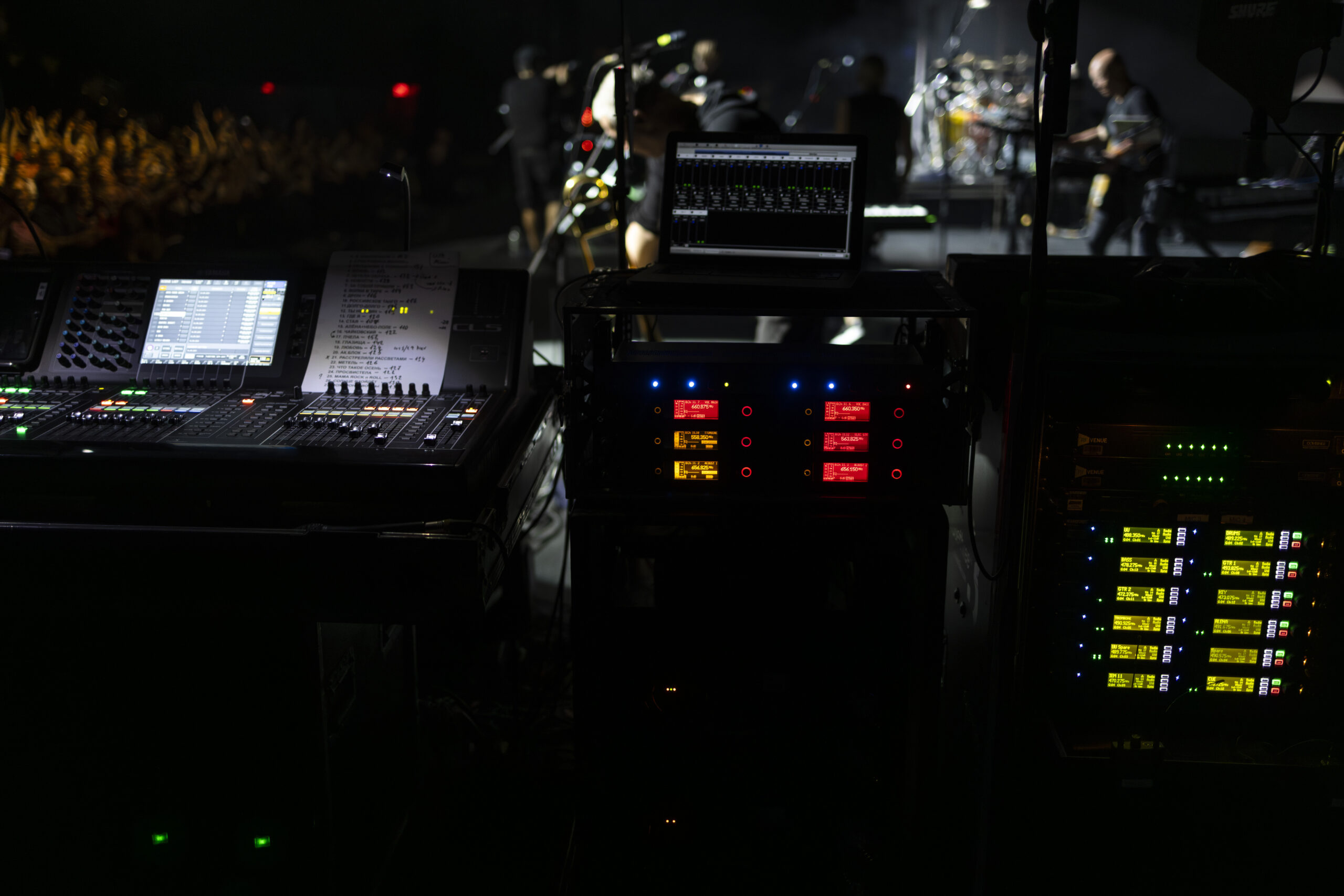
AV production backup power systems are not an afterthought — they are the vertebrae of every professional live event. From stadium-scale touring productions carrying Caterpillar diesel generators to the slickest corporate ballroom install running Eaton UPS units in the back-of-house rack, the philosophy is identical: power failure is not an option, and redundancy is not paranoia — it is engineering.
The History That Made Redundancy Non-Negotiable
Before the widespread adoption of digital infrastructure in live events, a single power interruption meant a brief dimmer flicker. By the early 2000s, however, live productions were routing MIDI, OSC, and DMX512 across the same power chain as amplifiers, LED processors, and playback servers. The stakes multiplied overnight. The 2003 Great White nightclub fire — though caused by pyrotechnics — reshaped the entire conversation around venue infrastructure, emergency systems, and contingency planning. Within a decade, power redundancy protocols had become a contractual rider requirement on virtually every major touring production.
Why One Generator Is Never Enough
A single generator running a d&b audiotechnik line array system, a full grandMA3 lighting network, and a Barco video processing rack is already under enormous stress. Add stage management comms, broadcast feeds, sponsor LED walls, and artist in-ear monitor systems, and you have a machine that cannot afford even a microsecond of dropout. The professional standard answer is N+1 redundancy: one primary source plus at least one full-capacity backup that can assume the entire load without the show audience ever detecting a transition.
High-end productions often deploy what is called tiered power architecture. The primary generator feeds the main distribution. A second generator sits warm on standby with an automatic transfer switch (ATS) rated for sub-100ms switching. A third layer — typically uninterruptible power supplies (UPS) — sits inline between the ATS and sensitive digital equipment, bridging the gap during any switchover transition. Companies like Aggreko and Sunbelt Rentals have built entire service divisions around event-grade power contingency because the demand has never been higher.
Critical Load Segmentation
Smart power distribution strategy doesn’t lump everything onto a single panel. Modern productions segment loads deliberately. Audio amplifiers, particularly touring-grade models like the Lab.gruppen PLM Series or Crown iTech HD, draw enormous reactive current at startup and during program peaks. These live on their own isolated distribution leg. Lighting dimmers and LED driver systems go on a separate branch. Digital consoles, Dante network switches, intercom frames, and video playback servers — the irreplaceable brains of the show — sit behind dedicated double-conversion UPS units that provide clean, regulated power regardless of what the generator is doing upstream.
The Role of Automatic Transfer Switches
The automatic transfer switch is the unsung hero of live event power engineering. Units from Asco, Russelectric, and Cummins Power Generation can execute a load transfer in under 10 milliseconds when properly spec’d. For most digital audio and lighting equipment, a sub-30ms switchover is imperceptible. The critical configuration detail is the open transition vs. closed transition setting: open transition briefly disconnects load from both sources during switchover; closed transition maintains continuous power by briefly paralleling both generators before releasing the primary. Broadcast productions and network televised events almost always specify closed-transition switching.
Generator Sizing and Load Calculations
The cardinal sin of show power is undersizing. The power factor (PF) of modern switching power supplies and amplifier topologies rarely hits unity — a nominal 50kW load on paper may draw 65kW effective from the generator under real conditions. Experienced production electricians calculate apparent power (kVA) vs. real power (kW) for every system, then add a minimum 25% headroom buffer before specifying generator size. For a touring production running Meyer Sound LEO PA, full Robe BMFL rig, and a 12-meter ROE Visual Carbon CB5 LED screen wall, 400kVA total plant capacity with 150kVA hot standby is a reasonable baseline.
Fuel Logistics and Runtime Planning
A 350kVA diesel generator consuming fuel at peak load will drink approximately 25–30 liters per hour. A 14-hour festival day — load-in through strike — can burn 400 liters. Multiply that by multiple generator sets and the fuel logistics chain becomes a production management task as complex as audio system prep. Production managers working with companies like Aggreko schedule dedicated fuel deliveries mid-show-day on major outdoor events, using sub-base tanks or auxiliary fuel bladders connected via fuel polishing systems that filter water and contamination before it reaches the injection system.
UPS Technology in Modern AV Stacks
The double-conversion online UPS architecture has become the gold standard for protecting digital AV infrastructure. Unlike standby or line-interactive topologies, double-conversion continuously powers the load from the inverter while keeping the batteries charged — meaning the connected equipment never sees raw generator power at all, only clean sine-wave output at the rated voltage and frequency. Eaton 9PX, APC Smart-UPS Ultra, and Vertiv Liebert GXT5 are staple units found in touring racks globally. For facilities installations, three-phase UPS systems from the same manufacturers protect entire server rooms and patch bays simultaneously.
The Human Side of Power Management
No redundancy system runs itself. Every major touring production has a designated production electrician — or on arena-scale shows, an entire electrical department — whose sole responsibility is monitoring, maintaining, and troubleshooting the power plant. Real-time monitoring via platforms like Schneider Electric EcoStruxure gives production electricians dashboard visibility into load levels, generator fuel consumption, UPS battery state-of-health, and transfer switch status from a tablet at front-of-house. When something deviates from baseline at 9pm during a sold-out arena show, that data is the difference between a 30-second graceful recovery and a full blackout.
What the Audience Never Sees
The most successful backup power deployment is the one that never announces itself. Done correctly, the generator transfer happens invisibly, the UPS absorbs any transient, and the show continues without a flicker. The multi-layered power redundancy strategy in modern live events represents decades of hard lessons — shows that went dark, artists who walked off stage, broadcast windows that went to black — distilled into engineering discipline. For any production where failure is unacceptable, the answer has always been the same: build in more redundancy than you think you need, then add one more layer on top.
Produced for AV Industry Insight | © 2025 All Rights Reserved
