Improvised Atmospheric Performances and Their Consequences
Automation Meets Artistic License
Fog machines represent a peculiar category of production equipment: devices whose output is inherently uncontrollable once released. Unlike lights that illuminate specific areas or sound that propagates predictably, fog moves with air currents, responds to temperature gradients, and generally behaves according to physics rather than operator intention. When the Look Solutions Viper or Ultratec Radiance systems receive their DMX commands, they release atmospheric effects that then become independent actors in the production—sometimes following the script, sometimes improvising in ways that surprise everyone.
The interaction between fog output and venue conditions creates infinite variability. HVAC systems push atmospheric effects in unexpected directions. Stage lighting creates thermal currents that affect fog movement. Even audience body heat in large venues influences how atmospheric effects behave. Operators who have mastered fog control in one venue may find their expertise completely inadequate in different spaces with different air handling characteristics.
Legendary Fog Improvisation
Production history contains numerous examples of fog systems that developed their own artistic vision. A legendary 1980s concert tour featured a Rosco 1600 fogger that operators swore would respond to the music, producing more output during climactic moments regardless of DMX commands. Investigation revealed that the foot-mounted DMX cable would flex slightly with stage vibration during loud passages, creating intermittent contact that the machine interpreted as random cue changes. The fog had been responding to the bass drum all along.
Corporate events generate their own fog improvisation legends. One pharmaceutical launch in 2018 deployed cryo jets programmed to fire during a product reveal, but electrical interference from video walls triggered premature activation. The CO2 blast occurred during the CEO’s introduction, momentarily obscuring the executive in a cloud that audience members initially mistook for a special effect. The quick-thinking CEO incorporated the accident into his remarks, but the production team spent the remainder of the event troubleshooting interference issues that shouldn’t have affected properly shielded equipment.
The Chemistry of Unpredictability
Different fog technologies create different improvisation potential. Glycol-based fog from heated machines produces particles that rise with thermal convection before gradually settling, creating behavior patterns affected primarily by heat sources and air currents. Glycerin fog falls more quickly, pooling in low areas unless actively circulated. Oil-based haze from machines like the DF-50 produces extremely fine particles that hang indefinitely, creating potential for gradual accumulation that obscures visibility progressively rather than dramatically.
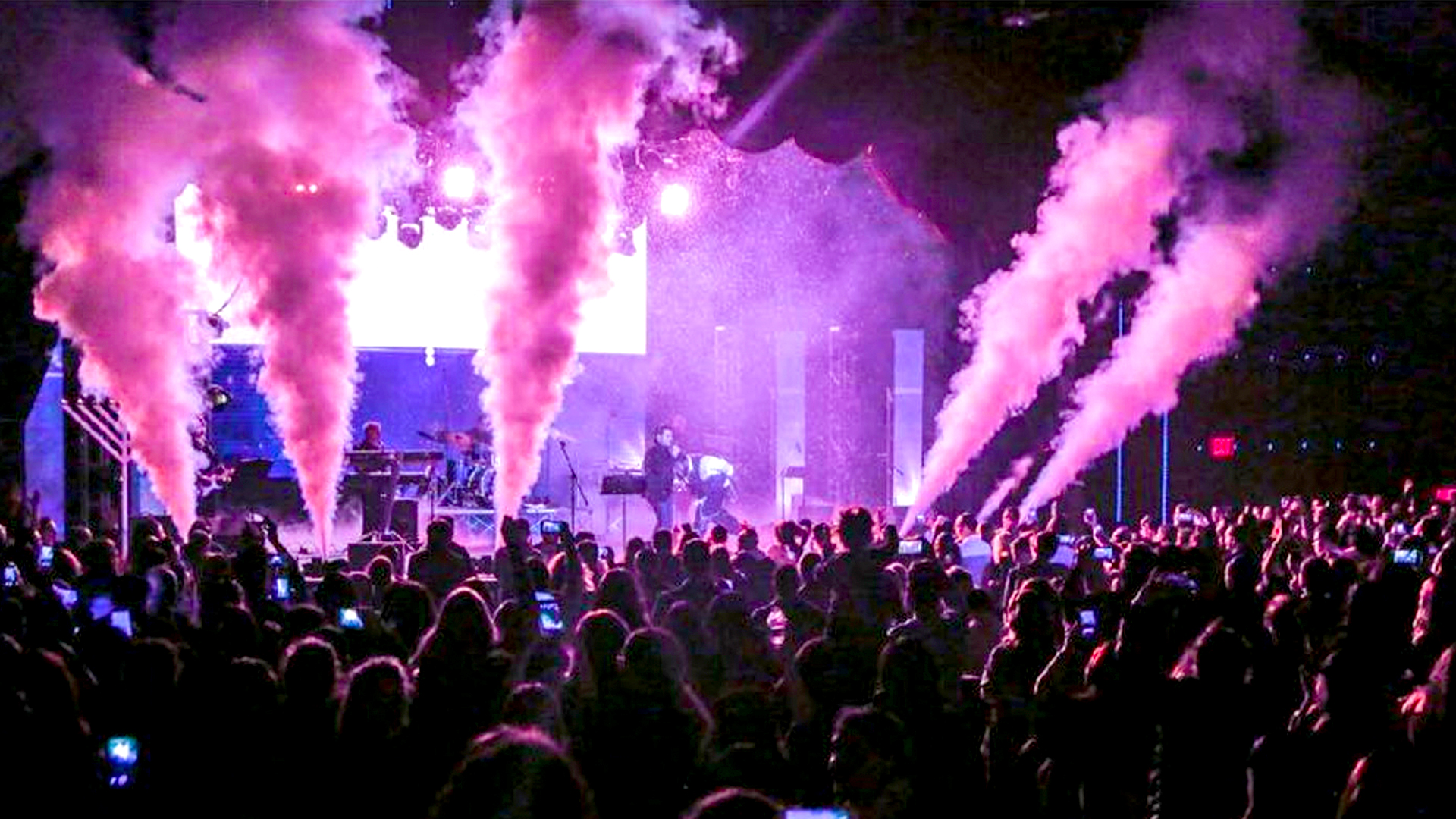
Low-lying fog systems using liquid nitrogen or CO2 chilling create effects that should remain floor-level but respond dramatically to air movement. A perfectly still venue might display ethereal fog flowing across stages; the slightest air current from HVAC or even door movement transforms this effect into unpredictable clouds that may rise, disperse, or concentrate in areas far from intended coverage. The Glaciator and similar systems require environmental stability that venues often cannot guarantee.
Control Systems and Their Limitations
Modern fog systems incorporate DMX control that should provide reliable operation, yet the gap between command and output creates opportunities for improvisation. Output delays mean that DMX commands and visible effects don’t synchronize precisely. Thermal inertia in heated machines means that fog production continues briefly after commands stop and takes time to begin after activation. These characteristics create edge conditions where precisely timed cues produce unpredictable results.
Automated shows using timecode triggering face particular challenges with fog control. The lighting and video elements responding to the same timecode produce exactly specified outputs, but fog effects only approximate intended appearance. Theatrical productions have addressed this by incorporating fog behaviors into rehearsal processes, adjusting other elements to accommodate fog characteristics rather than expecting fog to match predetermined specifications. Concert productions with minimal rehearsal lack this adaptation opportunity, often discovering during performances that fog effects don’t match their theoretical designs.
The Operator’s Art
Experienced atmospheric effects operators develop intuitive understanding of how fog systems behave in various conditions. They monitor venue air movement, anticipate HVAC effects, and adjust output levels in real-time to achieve intended visual effects despite system unpredictability. This skill develops only through extensive experience with failures that teach what theory cannot communicate—the difference between what fog systems should do and what they actually do in practice.
The best operators treat fog systems as collaborative partners rather than obedient tools. They work with the systems’ tendencies rather than against them, accepting that some improvisation is inevitable and planning for adaptable responses rather than rigid expectations. This philosophical approach creates better outcomes than attempting to control systems that respond to physical forces beyond operator influence. The fog will do what the fog will do; successful operators prepare for that reality rather than demanding obedience that atmospheric physics cannot provide.
