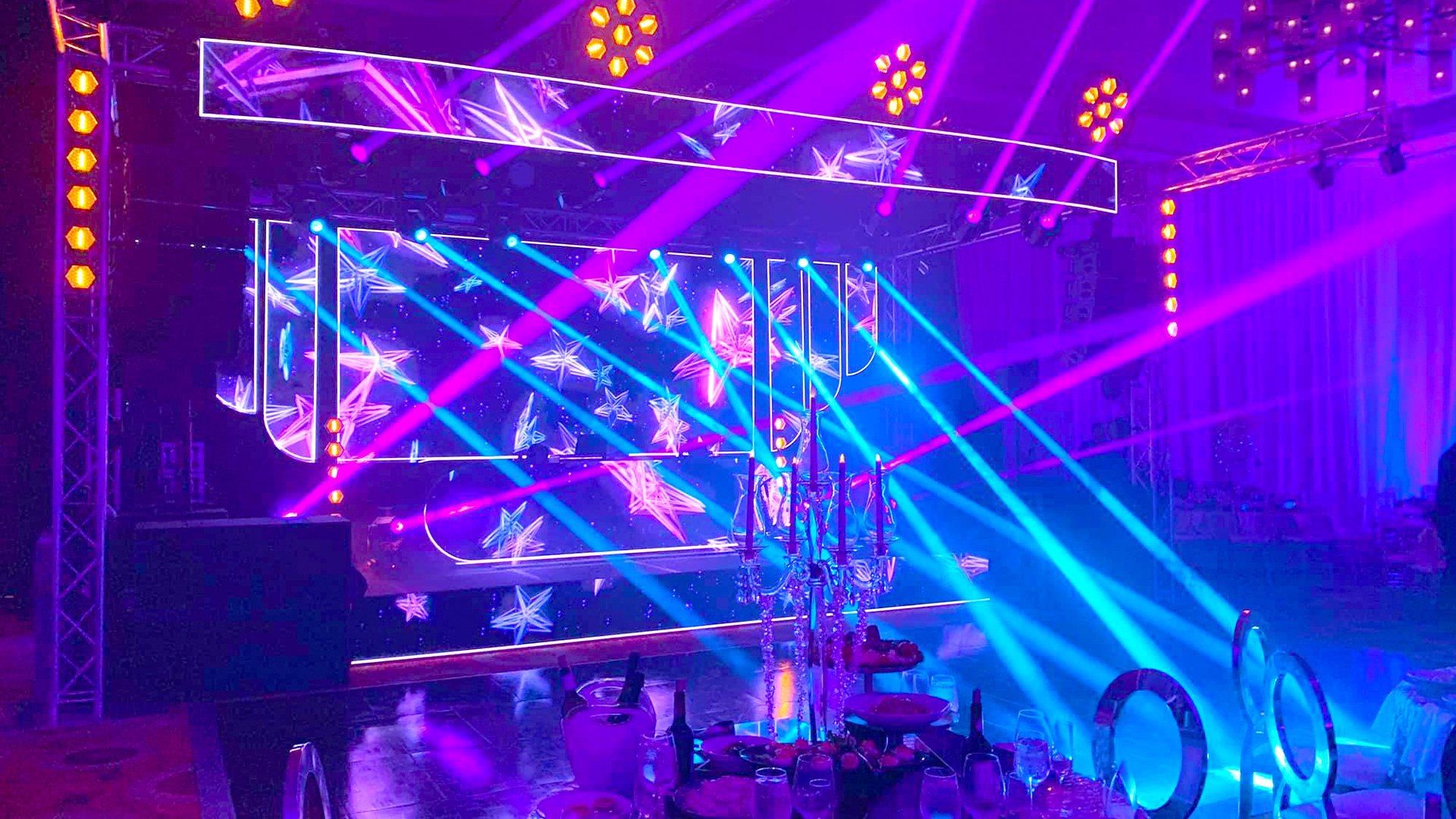
The difference between a forgettable keynote and one that commands the room often comes down to something audiences never consciously notice: the lighting. When a speaker steps onto a stage bathed in unflattering overhead fluorescents or harsh side angles, their credibility takes an invisible hit before they utter a single word. Conversely, when front lighting sculpts their features with precision, audiences perceive authority, warmth, and expertise. This isn’t psychology it’s physics meeting perception, and the AV production industry has spent decades perfecting the formula.
The Foundation: Understanding Key Light Positioning
Every compelling stage presence begins with the key light—the primary illumination source that defines how an audience perceives a speaker’s face. Position this incorrectly, and you create under-eye shadows that make even the most energetic CEO look exhausted. The sweet spot sits approximately 45 degrees above eye level and 30 to 45 degrees off-axis from the speaker’s natural facing direction. This configuration, borrowed from Hollywood cinematography traditions dating back to the 1930s studio system, eliminates harsh shadows while maintaining enough dimensionality to prevent that flat, washed-out corporate video look.
Modern productions typically rely on ETC Source Four ellipsoidals or Martin MAC Encore fixtures for key light duties. The Source Four has dominated corporate stages since its 1992 introduction because of its precise beam control and legendary reliability—you’ll find them hanging in everything from Broadway theaters to Fortune 500 annual meetings. The MAC Encore series brings LED technology into the equation, offering the color temperature adjustability that lets lighting designers match daylight streaming through windows or warm evening ambiance depending on the event’s emotional requirements.
Fill Light: Softening Without Flattening
Where key light creates definition, fill light prevents the opposite side of a speaker’s face from disappearing into shadow. The rookie mistake here involves matching fill intensity to key intensity, which produces that unflattering passport photo aesthetic. Professional lighting designers typically set fill at 50 to 70 percent of key light intensity, maintaining enough shadow to preserve facial dimensionality while ensuring IMAG cameras capture usable footage from multiple angles.
Softboxes and diffusion panels have become essential tools in this equation. Running a Chimera lightbank in front of a tungsten or LED source transforms harsh point-source illumination into wrapping, forgiving light that flatters virtually any skin tone. This technique gained prominence in the television industry during the 1980s multicamera sitcom boom and has since migrated into corporate AV production as audiences developed expectations shaped by broadcast quality.
Backlight and Rim Light: Separation From the Background
Nothing undermines speaker presence faster than visual merger with the backdrop. Backlight and rim light solve this by creating a luminous edge around the speaker’s shoulders and hair, producing that subtle halo effect that screams production value. Position these fixtures directly behind and above the speaker at steep angles—typically 60 to 75 degrees from horizontal—and you’ll achieve the separation that makes talent pop off LED walls and scenic backgrounds alike.
The historical roots of this technique trace back to early German Expressionist cinema, where directors like F.W. Murnau used backlight to separate actors from dark, moody sets. Today’s corporate productions employ the same principle using Chauvet Maverick MK3 Profile fixtures or Robe ESPRITE units, which offer the intensity and precision control necessary to thread light onto moving speakers without spilling onto upstage video surfaces.
Color Temperature Consistency: The Hidden Confidence Killer
Mismatched color temperatures create a subconscious unease that audiences feel without understanding why. When key lights run at 3200 Kelvin tungsten while house lights blast 5600 Kelvin daylight, speakers appear either jaundiced or corpse-like depending on camera white balance settings. The solution demands meticulous attention during the plotting phase, typically managed through lighting consoles like grandMA3 or ETC Eos systems that allow designers to dial in precise CCT values across entire fixture inventories.
The emergence of full-spectrum LED fixtures has simplified this challenge considerably. Products like the ARRI SkyPanel series offer color temperature ranges from 2800K to 10000K with exceptional color rendering indices, enabling lighting designers to match whatever ambient conditions exist in a venue. This flexibility proves particularly valuable during hybrid events where in-room and virtual audiences require different optimization strategies.
Movement and Following: Keeping Confidence Lit
Static speakers standing at podiums represent the simplest lighting scenario. Reality rarely cooperates. Modern presenters roam stages, interact with screens, and move through audience aisles—all while expecting consistent, flattering illumination. Follow spots remain the gold standard for tracking mobile talent, with operators stationed at front-of-house positions running Robert Juliat Cyrano or Lycian M2 followspots that deliver the intensity necessary to override ambient stage wash.
Automated tracking systems have emerged as alternatives for productions lacking followspot operator budgets. ZACTRACK and BlackTrax systems use sensors worn by speakers to communicate positional data to moving light fixtures, enabling automated following without human intervention. While these systems require significant front-end programming investment, they deliver consistent results across multi-day events where operator fatigue might otherwise compromise quality.
Practical Implementation: The Technical Checklist
Executing confident speaker lighting requires systematic preparation. During advance site visits, measure ceiling heights to determine throw distances and calculate required fixture intensities. Document existing house lighting that cannot be disabled—many venues maintain safety lighting requirements that must be incorporated rather than fought. Bring a Sekonic light meter to measure footcandle levels at speaker positions, targeting 80 to 120 footcandles for IMAG-friendly illumination.
Cable management deserves equal attention. Nothing destroys speaker confidence faster than tripping hazards lurking near podiums. Route power and DMX runs through cable ramps or fly them overhead when possible. If floor cables prove unavoidable, secure them with Gaffer tape in colors matching the stage surface black tape on black carpet, white on light floors to minimize visual distraction while eliminating trip risks.
The Psychology Behind the Physics
When lighting designers nail every technical parameter angle, intensity, color temperature, movement tracking they create something that transcends specification sheets. Speakers standing in properly designed light feel the difference viscerally. They stand taller. They gesture more naturally. They make eye contact with audiences rather than squinting against harsh illumination. This physiological comfort translates directly into perceived confidence, creating a feedback loop where looking confident actually makes speakers more confident.
The AV production industry understands this connection intimately. It’s why lighting departments on major corporate productions often consume 30 to 40 percent of total equipment budgets—not because clients explicitly request elaborate lighting packages, but because experienced producers recognize that speaker success depends on invisible technical excellence. When that executive walks off stage feeling like they crushed their presentation, the lighting team knows their work succeeded even if nobody mentions their contribution.
Every element discussed here from key light positioning to automated tracking integration serves a single purpose: removing the technical barriers that prevent speakers from connecting with their audiences. Confidence on stage isn’t manufactured by lighting alone, but it can absolutely be undermined by lighting done poorly. The production professionals who master these techniques become invaluable partners for organizations that understand the stakes of major presentations. In a world where every keynote is potentially streamed, recorded, and reviewed indefinitely, lighting quality has evolved from nice-to-have production polish into essential communication infrastructure.
