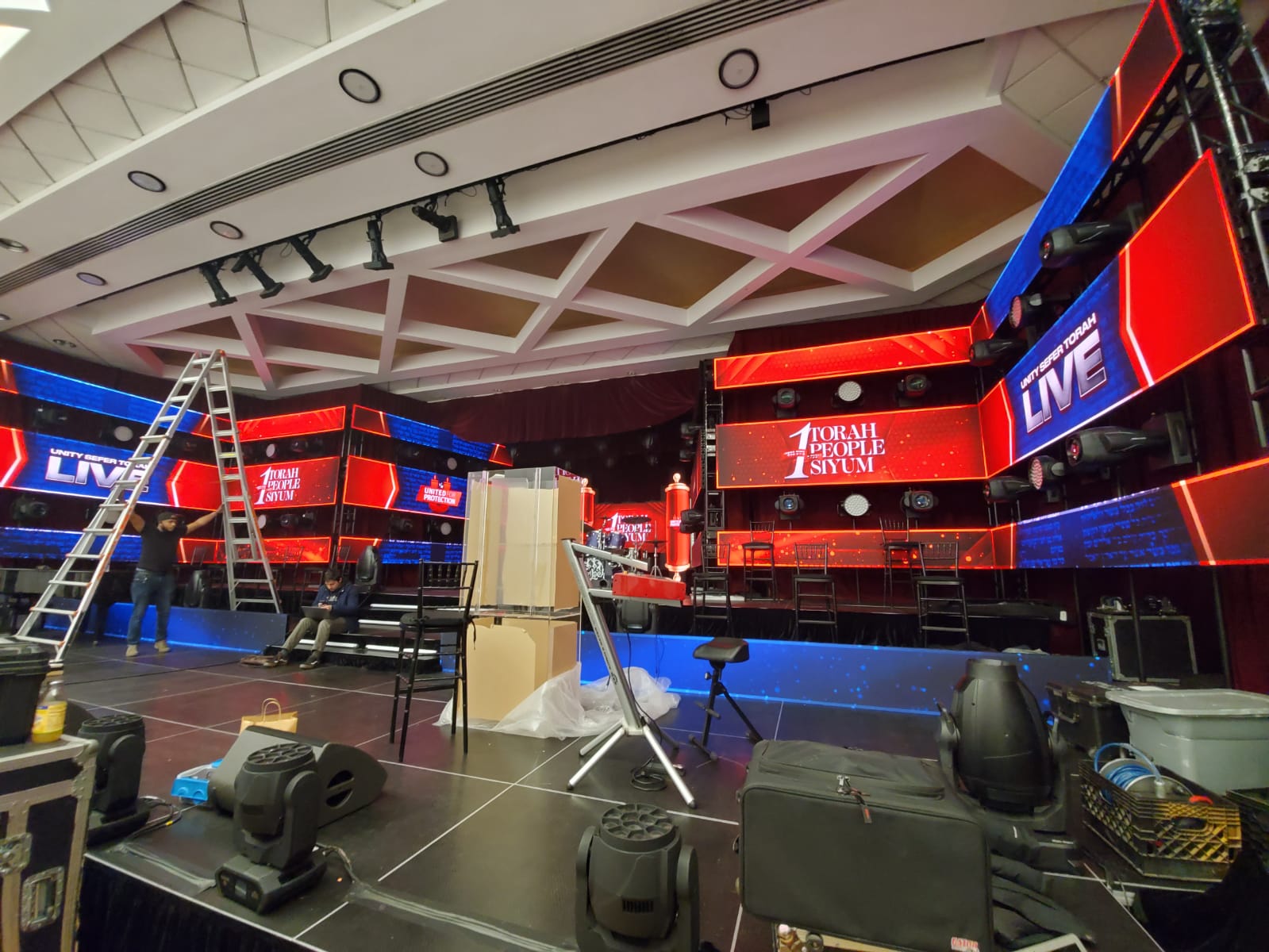
A large production load-in is a controlled collision between time pressure, physical complexity, and human coordination — and the margin between a smooth, on-schedule build and a chaotic, overtime-burning disaster is almost entirely determined by how well the crew is organized before the first case comes off the truck. The productions that build on schedule are the ones where every crew member knows exactly what they are responsible for, where they need to be, and what the sequence of dependencies looks like — not because they figured it out on the day, but because that information was communicated clearly before they arrived.
Load-in organization became a formal discipline in the live production industry as show scale grew beyond what a single experienced foreman could manage through direct oversight. By the mid-1990s, stadium and arena touring productions were routinely deploying 80 to 120 crew members across simultaneous department builds — a scale at which informal coordination collapses unless replaced by documented departmental structure, crew briefing protocols, and sequence management systems.
The Department Head Meeting Is Not Optional
The most impactful single investment in load-in organization is the department head meeting held before the crew arrives on site. This meeting — attended by the production manager, technical director, department heads for audio, lighting, video, rigging, and set — establishes the load-in sequence, identifies the critical path, confirms the truck arrival and unloading order, and resolves any outstanding questions about site access, power availability, or equipment staging areas.
A department head who has attended this meeting arrives on site with a clear picture of the first two hours of their department’s work, the dependencies they have on other departments, and the escalation path if those dependencies aren’t met. Without this meeting, each department head independently interprets the load-in call based on their own assumptions — and those assumptions will conflict in ways that don’t reveal themselves until crew members are literally in each other’s way on the loading dock.
The Critical Path Is the Master Document
Every large load-in should be organized around a critical path document that identifies the sequence of tasks that must be completed in order for the show to be ready on time. The critical path is not a complete task list — it is a dependency map showing which tasks cannot begin until other tasks are completed, which tasks have float (schedule slack), and which tasks, if delayed, directly delay the show call.
On a large theatrical or concert load-in, the critical path typically runs through rigging — no audio, lighting, or video can be flown until the rigging is complete and signed off. The rigging supervisor and their crew are therefore the first priority for staffing, staging area access, and equipment availability. Production managers who fail to understand their show’s critical path allocate resources to the wrong bottlenecks and find themselves with every department fully staffed except the one that everyone else is waiting on.
Zone Assignments and Crew Accountability
On large load-ins, physical space management is as important as task management. Zone assignments that divide the stage, wings, front-of-house, and loading dock into defined crew territories prevent the congestion that slows every department simultaneously. A well-organized large load-in looks like a construction site with clearly defined work zones — not a crowded space where everyone is working everywhere simultaneously.
Crew accountability on a large load-in is maintained through department-level check-in and check-out protocols that give the production manager a real-time headcount and a basis for escalating when department-level progress falls behind schedule. Tools like CrewForce, StageHands App, and Shiftboard provide digital crew management capability that scales appropriately for large productions. The alternative — relying on verbal check-ins from department heads — works at smaller scales but breaks down when the production manager has 12 departments reporting simultaneously.
Staging Areas and Case Flow Management
The staging area — the zone where road cases sit between being unloaded from the truck and being moved to their final positions — is one of the most commonly mismanaged elements of a large load-in. An understaffed or disorganized staging area creates a bottleneck that backs up into the truck unloading operation and slows the entire build.
Best practice is to assign a dedicated staging area supervisor whose sole responsibility is managing case flow from truck to stage — confirming that cases are staged in a logical deployment sequence, that they’re labeled correctly, and that department crew can locate their gear without searching. This position is often staffed by the most experienced local crew member available, not the most senior touring crew member — local knowledge of the specific loading dock and staging area layout is often more operationally valuable than touring experience on this particular role.
Radios and Communication Architecture
A large load-in requires a radio communication system with enough channels to separate department communications from production management communications. Typically: a production management channel for the production manager and department heads, department-specific channels for internal crew communication, and a all-call channel for production-wide announcements. Motorola RDX series or Kenwood ProTalk series radios are standard in production environments — the critical investment is having enough units to equip every crew lead and every key communication point.
The radio channel structure should be communicated to every crew member in the load-in call sheet — not announced verbally at the start of the day when half the crew is focused on unloading. A laminated channel assignment card that clips to the radio is a small investment that eliminates the constant channel confusion that wastes significant time on large load-ins.
The One-Hour Check-In Rhythm
On a large load-in, the production manager’s most valuable operational practice is a structured check-in with all department heads at a defined interval — typically every 60 minutes during the build. These check-ins take five minutes and answer three questions: Is your department on schedule? What do you need that you don’t have? What are you waiting on from another department?
The answers to these questions, aggregated across all departments every hour, give the production manager an accurate picture of overall build progress and allow resource reallocation decisions to be made before a single-department delay cascades into a multi-department crisis. The production manager who is responding to crises is always behind. The one running hourly check-ins is always ahead of them.
