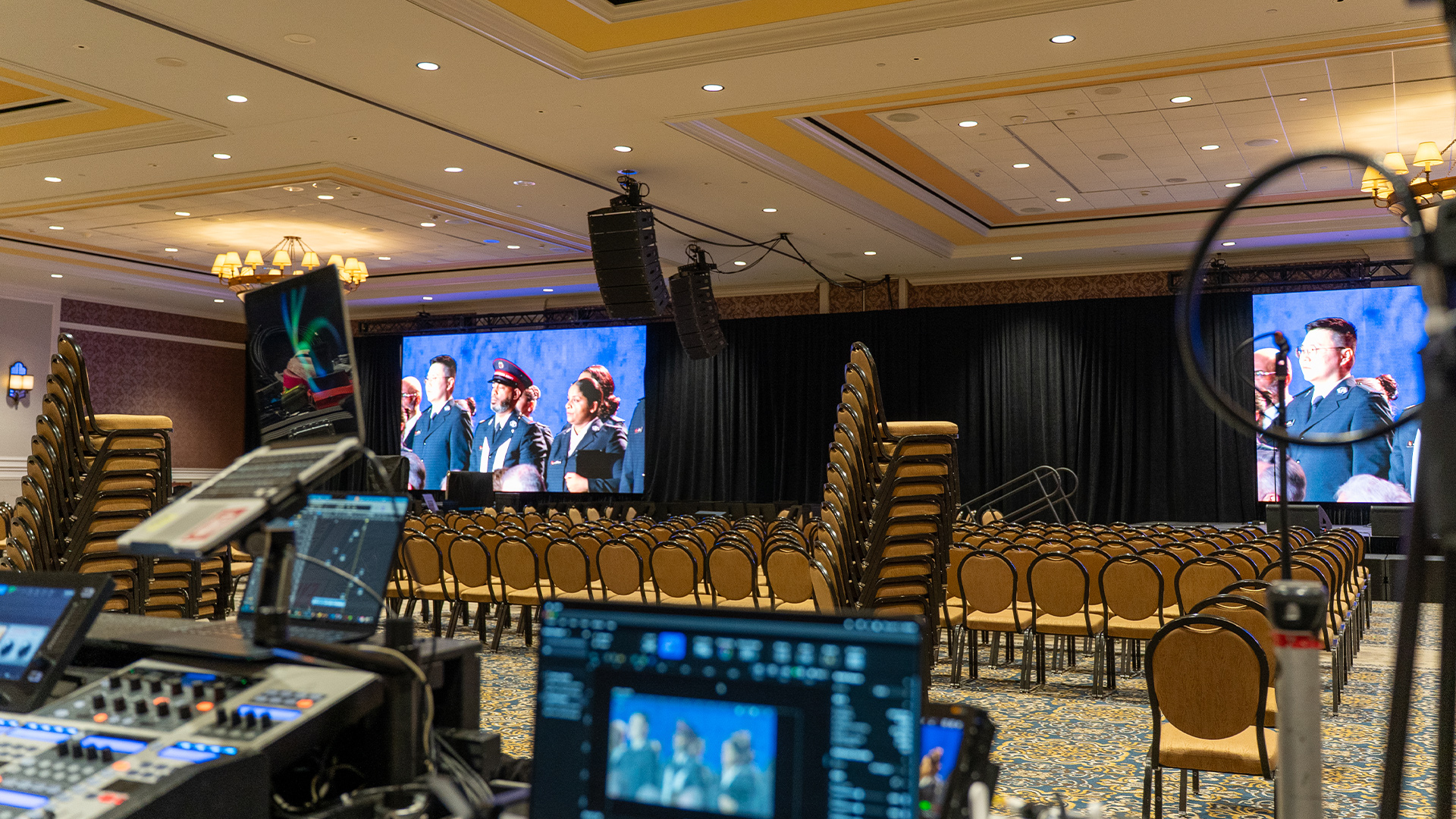
A multi-day festival with multiple acts per stage presents a line array design challenge fundamentally different from any single-show deployment. The system must serve the acoustic requirements of a 20-minute opening act performing to a half-full field at 2 PM, a mid-bill headliner filling the same field to capacity at 8 PM, and a closing DJ set running until 4 AM with completely different mixing practices, spectral content, and SPL requirements. All three performances happen on the same system, with the same hang geometry, the same subwoofer placement, and — during the festival day — the same operator team making real-time adjustments that span the full range of live sound practice.
The Universal System: Designing for Maximum Versatility
The festival main stage line array must be a universal system — acoustically capable across a wide range of genres, output levels, and mixing styles without requiring physical reconfiguration between acts. This requirement drives system designers toward larger cabinet counts than any single act would technically require, providing headroom that accommodates the peak demands of the loudest acts without limiting the softer performances that share the same infrastructure.
The L-Acoustics K2 has become perhaps the most common festival main stage line array precisely because its system architecture scales gracefully across this dynamic range. A K2 system configured for a 50,000-person capacity main stage — 16 cabinets per side plus 12 KS28 ground subs — will comfortably serve a sparse acoustic performance at the low end of its dynamic range while delivering the 130+ dB peaks demanded by EDM headliners at the high end. The system’s LA12X amplifier/controller platform enables per-act preset recall, allowing system engineers to load pre-optimized EQ and gain settings for each act from a stored configuration library rather than manual adjustment between changeovers.
Act-to-Act Changeovers: The 30-Minute Engineering Sprint
The festival changeover window — the 20-30 minute gap between acts where the stage is reset for the next performance — is one of the most intensely coordinated production sequences in the live event industry. Within this window, the stage management team strikes one artist’s backline while the next artist’s backline is set up; monitor engineers transition from one artist’s IEM mix to the next; and the system engineer transitions the PA system from one act’s optimization to the next.
Experienced festival system engineers using L-Acoustics LA Network Manager, d&b R1 Remote Control Software, or JBL HiQnet Performance Manager build per-act system snapshots during pre-festival preparation that store the complete DSP state — EQ, delay, limiting, and gain structure — for each act on the bill. At changeover, loading the next act’s snapshot takes less than 60 seconds, transforming a potential 20-minute manual optimization into a single button press. The remaining changeover time is spent on quick measurement verification at FOH, confirming that the stored settings still apply accurately in the ambient conditions of the current performance time.
Weather Adaptation: Systems That Survive Festival Conditions
Multi-day outdoor festivals in northern Europe and North America routinely encounter the full range of summer weather conditions within a single event: bright sunshine at 35°C during afternoon acts giving way to an evening thunderstorm before the headliner, with overnight temperature drops that leave the system components cold-soaked for the following morning’s early setup.
The weatherproofing standards for festival-deployed line array cabinets have evolved significantly since the early 2000s, when most touring PA cabinets used standard birch plywood construction with minimal moisture resistance. Current generation cabinets — L-Acoustics K2, d&b KSL8, JBL VTX V25-II — use marine-grade or phenolic-faced plywood construction with polyurea or polyurethane exterior coatings that provide genuine moisture resistance against incidental rain exposure. The cabinets’ transducer mounting systems and electrical connector interfaces are designed to maintain reliability after exposure to rain, morning condensation, and the temperature cycling inherent in multi-day outdoor deployments.
FOH Position Engineering: Serving Multiple Mix Engineers
A multi-day festival bill will involve a different FOH mix engineer for each act — each with their own mixing preferences, their own approach to system EQ, and their own history of working with or against the specific line array system deployed. The system engineer’s role in this environment includes not just the technical optimization of the PA but the human coordination of ensuring that each visiting engineer receives a system that is consistently configured as a neutral starting point.
The professional standard for festival FOH handover involves the system engineer presenting each visiting engineer with a consistent, flat-as-possible system EQ starting point — typically a state where the system’s own EQ compensation is engaged (correcting the cabinet’s inherent frequency response to a flat target) but no room correction or creative EQ is applied. The engineer then adds their preferences from this neutral foundation. The Lake LM 44 processor — used as a system-level EQ device between console outputs and amplifier inputs — maintains this neutral starting state across all acts while allowing each engineer to add their personal EQ above it through the console, without risk of cumulative system EQ changes building across the festival day.
The System Team: People Behind Multi-Day Production
The technology of multi-day festival line array deployment is ultimately delivered by a team of people whose expertise, endurance, and professional judgment determine whether the system performs as designed or merely as theoretical. A complete festival sound system team for a major main stage includes a system engineer (responsible for the PA system design, deployment, and ongoing optimization), a PA tech (responsible for physical maintenance, cable management, and equipment tracking), and a monitor engineer (responsible for the stage monitoring system serving performing artists).
The system engineer’s role is the most technically demanding over a multi-day event: they are present from first truck arrival through last act completion, typically a 15-18 hour day repeated across three or four consecutive days. Their responsibilities include a morning system check before first act, real-time monitoring during all performances, act-to-act DSP transitions, weather-related system adjustments, and post-show inspection of all components before the system is secured for the night. Companies including Britannia Row Productions and Capital Sound are known for the quality and experience level of the system engineers they assign to major festival productions — a quality standard that the festival’s technical director specifies by name in the production contract, not merely by role description.
After thousands of productions and millions of audience members served, the most important truth about multi-day festival sound system design remains what it has always been: the best system is the one that lets the music be the headline. Every engineering decision — cabinet selection, subwoofer geometry, delay tower alignment, act-to-act handover protocol — exists in service of a moment where the sound is so right that no one in the audience thinks about it at all. That invisibility, earned through extraordinary technical discipline, is the highest achievement of live sound engineering.
